

Choosing the right street lighting system can have a significant impact on a project's installation cost, energy consumption, maintenance requirements, and long-term performance.
Solar street lights and traditional grid-powered street lights use different approaches to generating and supplying electricity. Solar systems generate energy through photovoltaic panels and store it in batteries, while traditional street lights rely on an electrical grid and wired power infrastructure.
So, which is better?
There is no single answer for every project. Solar street lighting can be particularly advantageous for remote, rural, and off-grid locations, while traditional grid-powered lighting can remain practical where reliable electrical infrastructure is already available.
The right choice depends on the project location, lighting requirements, installation conditions, energy costs, maintenance strategy, and total cost of ownership.
This guide compares solar street lights vs traditional street lights to help contractors, developers, municipalities, and lighting buyers make a more informed decision.
The main differences can be summarized as follows:
| Factor | Solar Street Lights | Traditional Street Lights |
|---|---|---|
| Power source | Solar energy | Grid electricity |
| Grid connection | Not required | Required |
| Power cables | Limited or unnecessary | Usually required |
| Civil works | Can be reduced | Often required for cabling |
| Initial equipment cost | Generally higher | Generally lower |
| Electricity cost | No grid electricity required | Ongoing electricity cost |
| Installation flexibility | High | Depends on grid infrastructure |
| Remote locations | Well suited | More difficult where grid access is limited |
| Battery | Required | Not required |
| Solar panel | Required | Not required |
| Maintenance | Includes battery and solar components | Includes electrical and lighting infrastructure |
| Energy independence | High | Low |
| Smart controls | Available depending on system | Available depending on infrastructure |
| Best suited for | Off-grid and distributed applications | Areas with established grid infrastructure |
The table provides a general comparison. Actual project costs and performance depend on the selected equipment, site conditions, local energy prices, installation requirements, and project specifications.
Understanding how each system operates helps explain their differences in cost and maintenance.
A solar street lighting system normally consists of:
During the day, the photovoltaic panel converts sunlight into electrical energy. The system stores the generated energy in the battery.
At night, the battery supplies electricity to the LED luminaire.
Depending on the system design, lighting operation can include automatic dusk-to-dawn control, scheduled dimming, motion sensing, or other energy-management functions.
Because the system generates and stores its own electricity, a direct connection to the utility grid is not required.
Traditional grid-powered street lighting normally connects LED luminaires to an electrical distribution network.
A typical installation may include:
Electricity is supplied continuously through the electrical infrastructure, and lighting operation can be managed through timers, photocells, centralized controls, or smart lighting systems.
This approach can be highly practical where a reliable electrical network already exists.
Cost is one of the most important factors when comparing the two systems.
However, comparing only the price of the lighting fixture can give a misleading result.
A better approach is to evaluate the total project cost, including equipment, civil works, electrical infrastructure, energy consumption, maintenance, and component replacement.
Solar street lights generally have a higher equipment cost because the system includes additional components such as:
Traditional LED street lights may have a lower fixture-level cost because they do not require photovoltaic and battery components.
However, traditional systems may require additional infrastructure such as:
Therefore, the initial project cost should be calculated on a complete installation basis rather than by comparing luminaire prices alone.
This is where solar street lighting can provide a significant advantage.
Solar street lights generate their own electricity and therefore do not require electricity from the utility grid during normal operation.
Traditional street lights consume grid electricity every night.
Over a long operating period, the difference in electricity consumption can become an important factor in project economics.
However, the actual financial benefit depends on:
For this reason, buyers should evaluate the expected lifecycle cost rather than relying on a simple fixture-price comparison.
A useful way to compare lighting systems is through Total Cost of Ownership (TCO).
A simplified TCO calculation can consider:
Total Cost of Ownership = Initial Installation + Energy + Maintenance + Component Replacement
The cost structure typically includes:
Initial investment
Solar panels + battery + LED luminaire + controller + structure
↓
Operating period
No grid electricity required
↓
Maintenance
Solar panel + LED system + battery + controller
↓
Component replacement
Battery and other components may require replacement during the system lifecycle.
The cost structure typically includes:
Initial investment
LED luminaire + electrical infrastructure + cables + distribution equipment
↓
Operating period
Ongoing electricity consumption
↓
Maintenance
LED fixtures + cables + control equipment + electrical infrastructure
↓
Component replacement
Lighting and electrical components may require replacement over time.
The most economical solution therefore depends on the specific project rather than simply choosing the system with the lower initial equipment price.
Installation requirements are another major difference.
Solar street lights can reduce the need for electrical infrastructure because each lighting point can operate independently.
This can simplify installation in locations where:
This makes solar lighting particularly attractive for rural roads, remote communities, parks, industrial access roads, and selected infrastructure projects.
Traditional systems require a connection to the electrical network.
Depending on the site, installation may involve:
Where electrical infrastructure is already available, these requirements may be relatively straightforward.
Where it is not, however, they can add significant project complexity.
Maintenance requirements are different rather than simply “higher” or “lower.”
| Maintenance Item | Solar Street Lighting | Traditional Street Lighting |
|---|---|---|
| LED luminaire | Required | Required |
| Pole structure | Required | Required |
| Solar panel | Periodic inspection/cleaning | N/A |
| Battery | Periodic inspection and eventual replacement | N/A |
| Controller | Required | Depends on system |
| Power cables | Limited | Required |
| Grid equipment | N/A | Required |
| Electrical infrastructure | Limited | Required |
| Cleaning | Solar panel may require cleaning | Fixture may require cleaning |
For solar lighting, the battery is an important lifecycle component.
For traditional systems, the electrical network and connected infrastructure can represent a larger maintenance scope, particularly in projects with extensive cable networks.
The most suitable system depends on which maintenance challenges are easier and more economical to manage at the project site.
Reliability depends heavily on system design and the operating environment.
Traditional grid-powered lighting benefits from an established electrical network where grid power is stable.
Solar lighting, on the other hand, is independent from the grid. This can be a significant advantage in areas where electrical supply is unavailable or unreliable.
For solar systems, reliability depends on proper matching of:
A system designed for one climate should not automatically be applied to another location without reviewing local solar and environmental conditions.
There is no universal winner.
The better solution depends on the project.
Typical applications include:
Typical applications include:
Some projects may benefit from combining solar and grid-powered lighting.
For example, solar lighting can be deployed in remote sections while grid-connected lighting is used in areas with existing electrical infrastructure.
This approach allows project designers to select the most appropriate energy solution for each location instead of applying one system to the entire project.
Solar street lighting can be used in a wide range of outdoor applications.
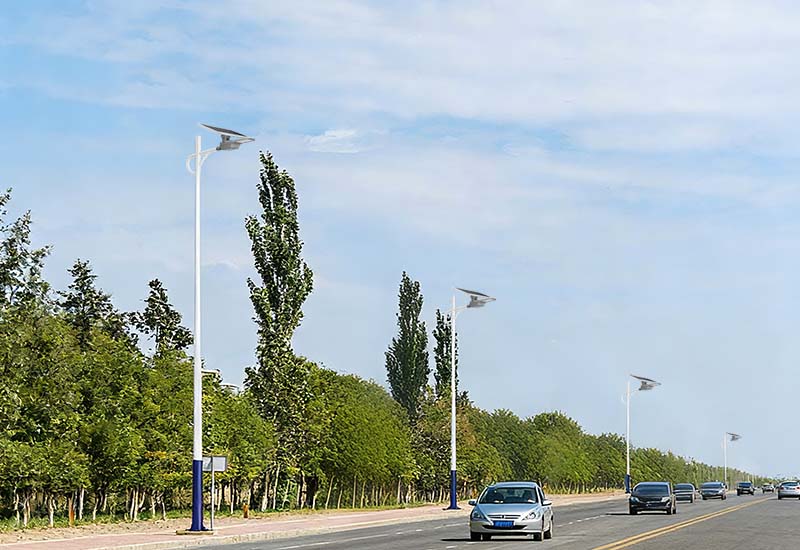
Rural roads are one of the most common applications because grid access can be limited and extending electrical infrastructure may be expensive.
Solar systems can provide independent lighting without requiring extensive underground cabling.
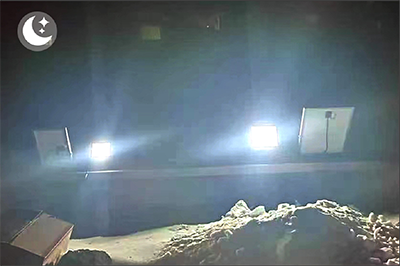
For remote communities and infrastructure projects, solar lighting can provide an independent source of nighttime illumination.
Solar street lights can also be used for parks, pedestrian areas, community spaces, and other distributed outdoor applications.
Solar lighting can be considered for selected industrial access roads, storage areas, and peripheral infrastructure where grid connections are limited.
Solar street lighting can also be suitable for some urban roads, depending on solar conditions, lighting requirements, available installation space, and project specifications.
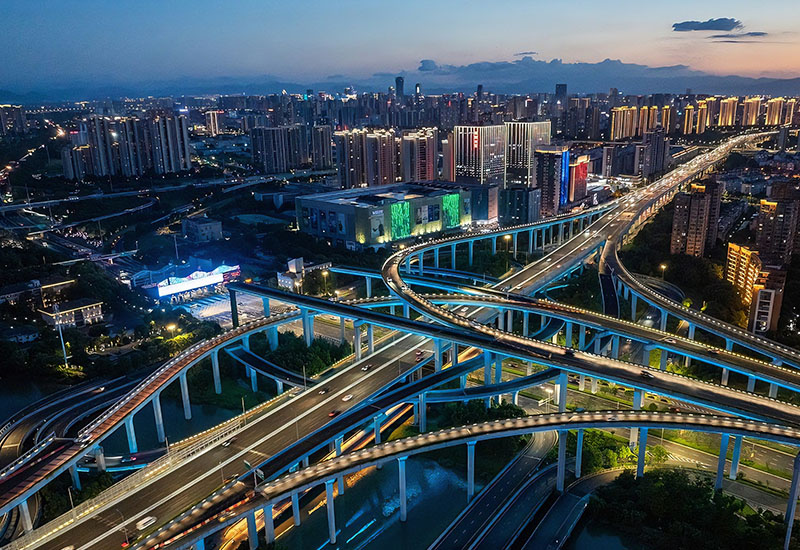
For major urban roads with established electrical infrastructure, grid-powered lighting may remain a practical option.
Before making a purchasing decision, project owners and contractors should evaluate the following factors.
If reliable grid infrastructure already exists, traditional street lighting may be easier to deploy.
If grid power is unavailable or difficult to extend, solar lighting becomes more attractive.
Consider:
The system should be selected based on:
Compare expected electricity consumption with the investment and maintenance requirements of a solar system.
Consider how easily maintenance teams can access:
Remote locations may benefit significantly from reducing dependence on grid infrastructure.
For long-term infrastructure projects, total cost of ownership is often more meaningful than the initial equipment price.
The development of solar lighting is also moving toward more intelligent and efficient systems.
Modern solar street lights may incorporate features such as:
These technologies can help optimize energy use and adapt lighting operation to actual conditions.
However, not every project needs advanced smart controls.
For a rural road, a reliable autonomous lighting system may be more important than a complex centralized control platform. For a large municipal project, intelligent monitoring and centralized management may provide greater value.
The system should therefore be matched to the project's actual operational requirements.
HIPO Lighting provides solar street lighting solutions for different outdoor and infrastructure applications.
Its solar lighting range includes different system configurations designed to address different installation environments and project requirements.
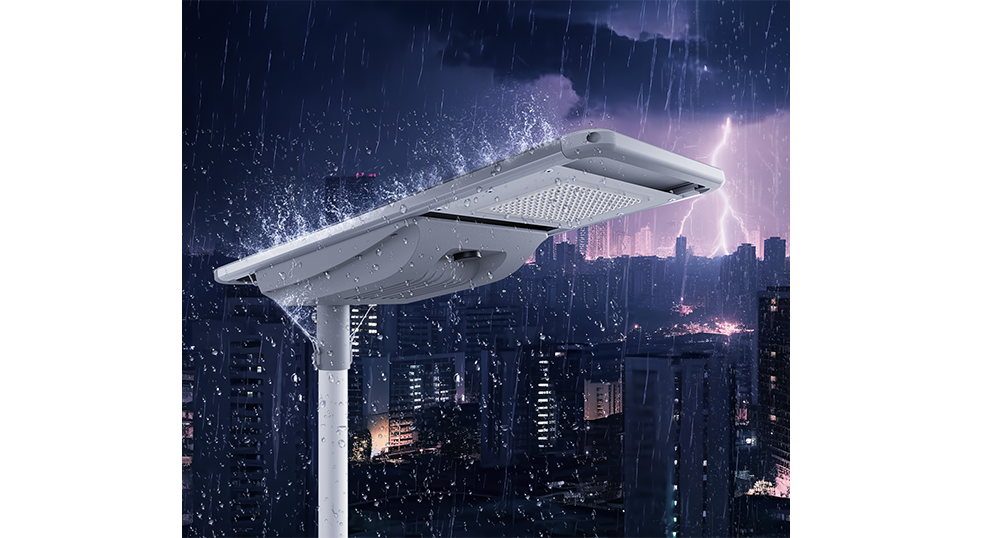
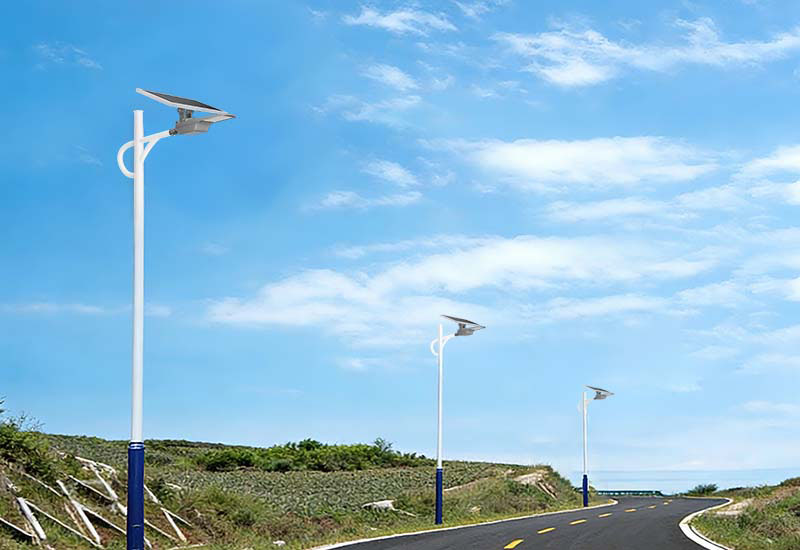
The S02 Kestrel2 is a split solar street light designed with separate photovoltaic and lighting components.
Its configuration includes a monocrystalline solar panel, LiFePO4 battery, MPPT charging technology, adjustable solar panel positioning, and IP66 protection.
The split configuration provides flexibility when positioning the solar panel according to site conditions.
S02 Kestrel2 split solar street light
The S07 is an integrated solar street light designed for applications requiring a compact solar lighting configuration.
Depending on the selected configuration, the S07 series integrates photovoltaic charging, battery storage, LED lighting, and outdoor protection into a single system.
For project applications, the appropriate configuration should be selected according to required lighting performance, operating hours, solar conditions, and installation environment.
S07 integrated solar street light
For broader applications, see HIPO's:
solar street lighting solutions
Selecting a suitable product is only one part of a successful street lighting project.
For contractors, distributors, EPC companies, and infrastructure developers, the manufacturer's technical and production capabilities can also affect project delivery.
Important factors include:
A manufacturer should have sufficient production capacity to support the required project quantity and delivery schedule.
Buyers should evaluate whether the manufacturer has systematic quality-control procedures covering incoming materials, production processes, finished products, and relevant performance testing.
An experienced lighting manufacturer should be able to adapt product configurations to different project requirements.
Engineering projects may require product drawings, technical specifications, lighting information, and configuration recommendations.
For distributors and lighting brands, OEM/ODM services can provide greater flexibility in product design, branding, and project-specific configurations.
HIPO Lighting supports outdoor lighting projects through its manufacturing, R&D, quality-control, OEM/ODM, and project-service capabilities.
Not necessarily at the initial equipment level. Solar street lights usually include additional components such as photovoltaic panels, batteries, and controllers. However, they can reduce the need for grid connection, cable installation, and ongoing grid electricity costs. The better comparison is total cost of ownership rather than fixture price alone.
The main challenges include higher initial equipment cost, dependence on solar energy availability, and the need to manage battery performance over the system lifecycle. Proper system sizing can help address these challenges.
Solar panels can still generate electricity under cloudy conditions, although energy generation is lower than under direct sunlight. The battery stores energy generated during daylight hours and supplies the lighting system at night. System sizing should account for local weather and seasonal solar conditions.
Battery service life depends on battery chemistry, operating temperature, charging and discharging conditions, system design, and maintenance. Battery replacement should therefore be considered as part of the overall lifecycle cost.
Solar street lights can be suitable for selected highway applications, such as auxiliary roads, service roads, access areas, and remote infrastructure. Major highway projects should be evaluated according to lighting requirements, solar conditions, safety requirements, and applicable standards.
Yes, in some applications. The suitability depends on solar conditions, lighting requirements, available installation space, operating requirements, and existing electrical infrastructure. Grid-powered systems may remain practical for areas with established electrical networks.
Solar street lighting can be easier to install where grid infrastructure is unavailable because it can eliminate or reduce cable trenching and grid connection work. Where electrical infrastructure already exists, traditional street lighting may also be straightforward to install.
Solar street lighting can have lower ongoing energy costs because it does not require electricity from the utility grid. However, battery replacement, maintenance, local solar conditions, and initial investment should all be included when evaluating lifecycle costs.
Yes. A hybrid approach can be suitable for projects with different site conditions. Solar lighting can be used in remote or off-grid areas, while grid-powered lighting can serve locations where electrical infrastructure is already available.
Start by evaluating grid availability, solar conditions, lighting requirements, installation costs, energy prices, maintenance access, and project lifecycle. For remote and off-grid projects, solar lighting can offer significant advantages. For grid-connected urban projects, traditional lighting may be more practical.
The choice between solar street lights vs traditional street lights should not be based on equipment price alone.
Solar street lighting can provide significant advantages for remote, rural, and off-grid projects by reducing dependence on electrical infrastructure and eliminating the need for grid electricity during normal operation.
Traditional grid-powered street lighting can remain an effective choice where reliable electrical infrastructure already exists, particularly in dense urban environments and projects with established power networks.
For contractors and project owners, the best solution should be determined by the complete project picture:
Installation + Energy + Maintenance + Reliability + Lifecycle Cost
By evaluating these factors together, project teams can select a street lighting system that provides the right balance of performance, cost, flexibility, and long-term value.
HIPO Lighting provides solar street lighting and outdoor lighting solutions for different infrastructure and outdoor applications. For a specific project, contact HIPO to discuss the site conditions, lighting requirements, and preferred system configuration.