

Most existing LED lighting procurement content focuses on how to import from China or why choose Chinese manufacturers. However, for professional engineers, procurement managers and tendering teams, the core pain point occurs during project bidding and supplier shortlisting: How to technically screen and score lighting suppliers to eliminate unqualified bidders and select the most reliable partner for large outdoor projects?
This article is designed exclusively for BOFU (Bottom of Funnel) project scenarios. It abandons basic purchasing knowledge and provides a practical lighting supplier checklist for tender evaluation. We break down professional LED lighting supplier evaluation into 10 quantifiable technical criteria, covering product performance, optical design, certification, testing capability, factory strength, QC system, customization, delivery, warranty and after-sales technical support. It serves as a direct scoring standard for lighting supplier selection in formal LED lighting procurement projects.
In municipal nightscape, commercial building, industrial park and landscape renovation projects, low-price bidding often leads to post-construction quality failures, frequent lamp damage, inconsistent lighting effects and high maintenance costs. Professional lighting manufacturer evaluation does not focus on quotation comparison alone. It uses technical indicators to verify the true engineering capability of each outdoor lighting supplier, ensuring that the final selected supplier can fully meet project design standards, acceptance requirements and long-term operational stability.
The first evaluation standard for an outdoor lighting supplier is whether its products fully match the project LED lighting specification. Many suppliers submit qualified parameter documents for bidding but deliver downgraded products.
During technical evaluation, verify rated power, lumen output, color temperature tolerance, CRI, IP/IK rating and surge protection configuration. Confirm no parameter cutting corners, no virtual standard marking, and all indicators meet tender requirements. This is the basic threshold for valid LED lighting supplier evaluation.
Ordinary manufacturers only provide fixed lamps; engineering-grade suppliers support scenario-based optical matching. Evaluate whether the supplier can provide targeted beam angle solutions, including narrow beam long-distance projection, medium beam flood lighting, wide beam uniform coverage, asymmetric road optics and professional wall washer flat light distribution.
Qualified lighting manufacturer evaluation requires suppliers to have independent optical design capabilities, avoid universal lamp rigid matching, and ensure on-site lighting uniformity, no glare and no stray light overflow.
Certification is the most intuitive qualification proof for formal bidding projects. Evaluate whether the supplier has complete CE, RoHS, EMC, LVD and other outdoor lighting certifications, and whether the certificates are real, valid and consistent with product models.
For high-standard municipal and bidding projects, suppliers need to provide third-party authoritative test reports to prove product compliance. Incomplete certification is a direct elimination item in lighting supplier selection.
Paper parameters cannot represent actual product performance. ProfessionalLED lighting procurement evaluation must verify the supplier’s internal testing capabilities, including aging testing, waterproof and dustproof testing, high and low temperature resistance testing, surge impact testing and light decay testing.
Suppliers without independent laboratories rely entirely on finished product procurement and cannot control product stability. Only manufacturers with complete testing procedures can ensure long-term outdoor lighting supplier product reliability.
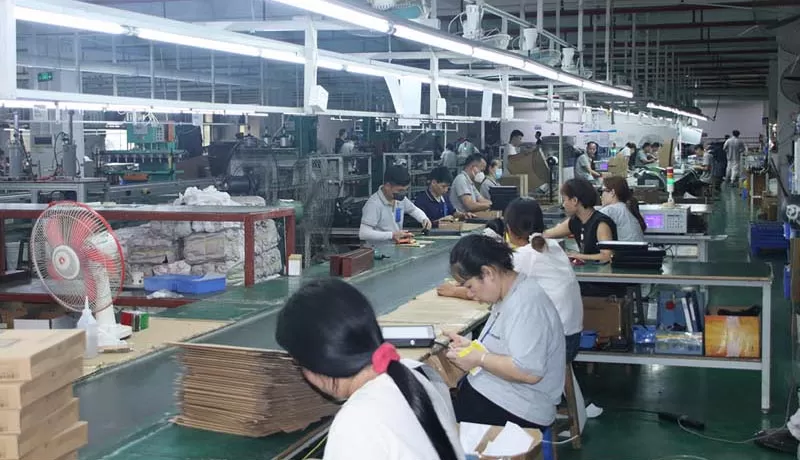
Evaluate factory scale, production line configuration, annual output and past project cases. Small workshops cannot support large-scale centralized delivery and complex project customization requirements.
Focus on verifying whether the supplier has rich experience in municipal, commercial, landscape and industrial outdoor lighting projects. Mature engineering production experience is an important invisible indicator of lighting manufacturer evaluation.
Stable product quality depends on a complete QC system, not random sampling. Evaluate the supplier’s full-process quality control links: incoming material inspection, production process sampling, finished product full inspection, aging screening and defective product elimination mechanism.
Suppliers with imperfect QC systems have unstable batch consistency, which easily leads to inconsistent brightness, color difference and differential failure of on-site lamps, seriously affecting project acceptance.
Large outdoor lighting projects have personalized design requirements in terms of appearance structure, optical parameters, control protocols and installation methods. Evaluate whether the LED lighting supplier supports non-standard customization, including beam angle adjustment, CCT customization, DMX/DALI/0-10V control matching and structural modification.
Strong customization capability represents the supplier’s technical R&D strength, which can solve various special scenario matching problems for complex projects.
Project construction has fixed time limits, and delayed delivery will directly cause project delay losses. Evaluate the supplier’s raw material reserve, production cycle, batch delivery capacity and emergency order response mechanism.
In lighting supplier selection, priority should be given to manufacturers with stable supply chains and standardized production schedules to ensure that products are delivered in batches as required and meet construction progress requirements.
Low-price suppliers often have no effective after-sales guarantee. Evaluate the supplier’s official warranty period (engineering-grade 3–5 years is standard), failure response speed, overseas after-sales service system and free replacement mechanism for quality problems.
Clear warranty terms and perfect after-sales system are core indicators to reduce project later-stage maintenance costs and are indispensable in the lighting supplier checklist.
Excellent suppliers do not only sell products, but provide full-process technical services. Evaluate whether the supplier can provide professional lighting calculation, beam angle matching, scheme optimization, specification sorting and on-site installation guidance.
For bidding projects, professional technical support can help the construction team optimize layout, avoid design errors, and greatly improve project acceptance efficiency, which is the core advantage of high-quality outdoor lighting supplier.
This quantitative scoring table can be directly used for internal tender evaluation and supplier technical scoring, helping your team quickly screen qualified suppliers and eliminate unqualified bidders.
Evaluation Dimension | Key Inspection Items | Qualified Standard | Elimination Risk |
|---|---|---|---|
Product Performance | Parameter consistency, power stability, protection grade | 100% match tender specification | Parameter falsification, downgraded configuration |
Optical Design | Beam angle customization, uniform light output, anti-glare | Support scenario-based optical matching | Universal lamp forced matching, serious stray light |
Certification Qualification | CE, RoHS, EMC, third-party test reports | Complete and valid certificates | Fake certificates, expired qualifications |
Testing Capability | Aging test, waterproof test, surge test, light decay test | Independent laboratory & full testing process | No testing link, rely on outsourcing inspection |
Factory Strength | Production scale, engineering project cases | Mass production capacity & mature project experience | Small workshop, no large project experience |
QC System | Full-process quality inspection, defective product screening | Strict batch quality control standard | Random inspection only, unstable batch quality |
Customization Ability | Optical, structural, control protocol customization | Support personalized engineering customization | Only standard lamps, no modification capability |
Delivery Capacity | Production cycle, batch supply, emergency response | On-time batch delivery as required | Long cycle, unable to support large orders |
Warranty Service | Warranty period, after-sales response, replacement mechanism | 3–5 years engineering warranty + quick after-sales | Short warranty, no effective after-sales guarantee |
Technical Support | Scheme design, calculation guidance, on-site service | Full-process professional technical support | Only product sales, no technical service |
Q1: What is LED lighting supplier evaluation for?
A1: Professional LED lighting supplier evaluation is used for tender screening and technical scoring, helping procurement teams eliminate unqualified manufacturers, avoid quality risks, and select stable and reliable outdoor lighting supplier partners.
Q2: What is the difference between supplier evaluation and general purchasing guides?
A2: General purchasing guides teach how to buy; this lighting supplier checklist focuses on how to judge supplier technical strength in bidding, which is more suitable for formal project LED lighting procurement and tender evaluation scenarios.
Q3: Which indicator is the most important for lighting supplier selection?
A3: Product parameter consistency, QC testing system and after-sales warranty are the three core indicators of lighting manufacturer evaluation, which directly determine project quality and long-term operation stability.
Q4: How to avoid suppliers with false bidding qualifications?
A4: Verify real test reports, factory testing capabilities and past project cases one by one through the 10-dimensional evaluation standard, and eliminate suppliers with only paper qualifications but no actual technical strength.
Q5: Does project lighting need customized supplier evaluation standards?
A5: Yes. Municipal, landscape, industrial and building facade projects have different technical thresholds. It is necessary to adjust evaluation weights according to project attributes to complete targeted LED lighting supplier evaluation.
Successful LED lighting procurement for large outdoor projects relies on scientific and systematic lighting supplier selection, not simple price comparison. The 10-dimensional technical evaluation system covering products, optics, certification, testing, factory, QC, customization, delivery, warranty and technical support can comprehensively assess the true strength of each outdoor lighting supplier, effectively avoid bidding risks, and ensure high-quality project delivery.
As an engineering-grade manufacturer with complete technical strength and standardized production systems, HIPO Lighting fully meets high-standard lighting manufacturer evaluation requirements. We provide transparent certification reports, complete testing data, professional optical customization, strict QC control, stable batch delivery and long-term after-sales guarantee, supporting global clients to complete high-quality project bidding and construction.
Need a professional supplier technical evaluation report for your tender project? Contact our technical team to obtain a full-set supplier qualification document and project matching solution.