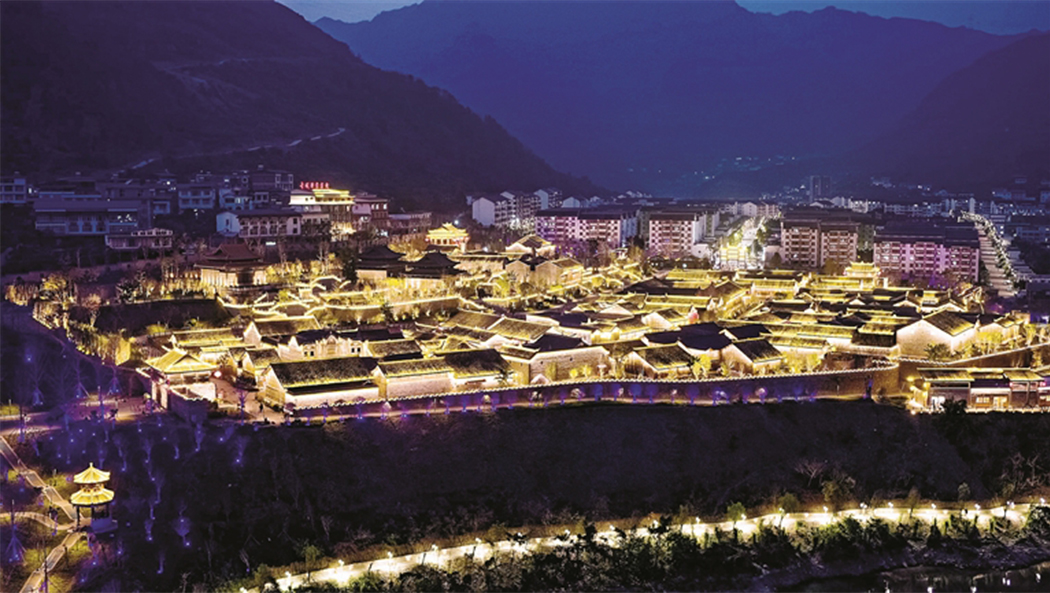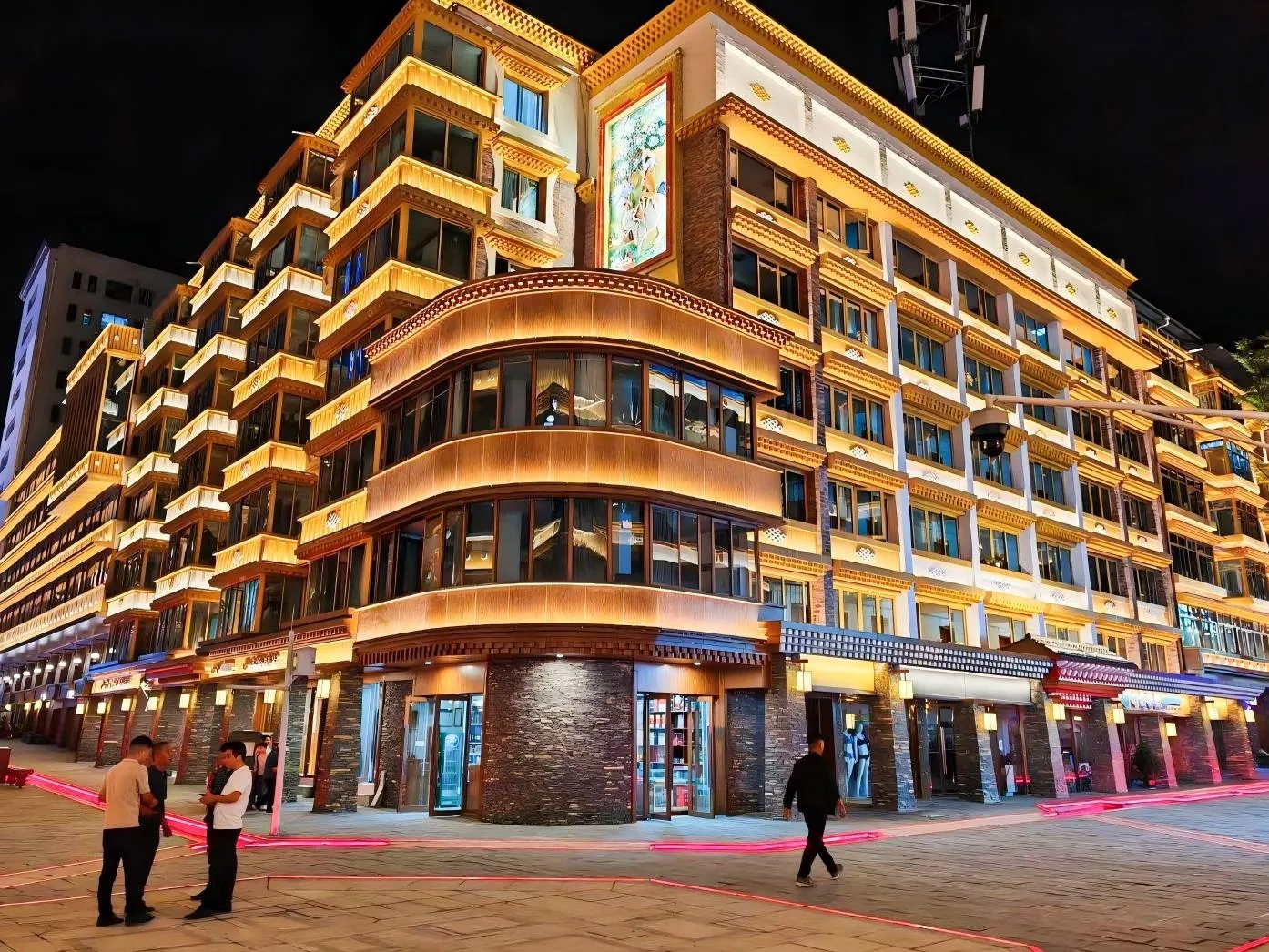


Modern highway development, rural infrastructure upgrades, and remote-area construction projects are creating growing demand for reliable and low-maintenance outdoor lighting.
For locations where grid access is limited or extending electrical infrastructure is expensive, solar lighting systems provide a practical alternative. They can operate independently from the utility grid while reducing the need for underground cabling and ongoing electricity costs.
However, selecting a solar lighting system for a highway or rural infrastructure project requires more than choosing a high-wattage solar street light. Contractors and project owners need to consider road layout, lighting performance, solar energy availability, battery capacity, weather conditions, installation requirements, and long-term maintenance.
This guide explains the key factors to consider when selecting solar lighting systems for highways, rural roads, bridges, and other remote infrastructure projects.
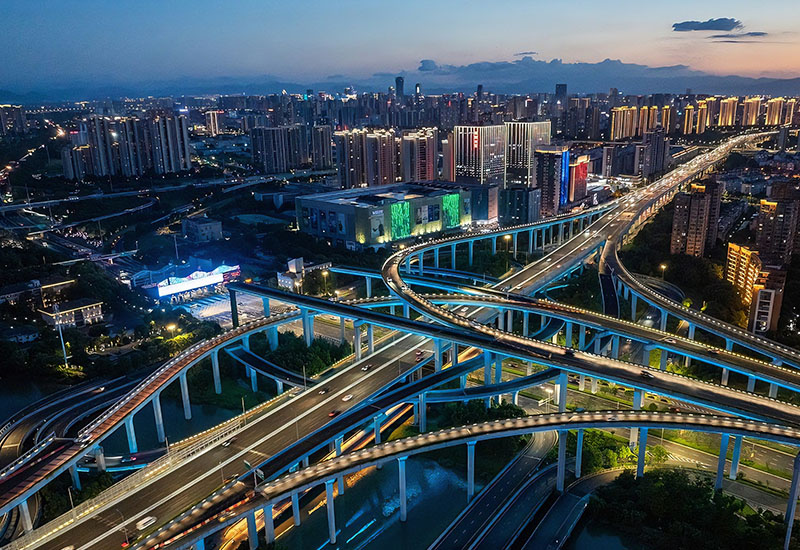
Solar lighting is particularly suitable for infrastructure projects where conventional grid-powered lighting would require extensive electrical work.
Solar street lights generate and store their own energy, eliminating the need for a direct connection to the electrical grid.
This makes them suitable for:
For projects located far from existing electrical networks, avoiding extensive cable installation can simplify construction and reduce infrastructure requirements.
Once installed, a solar lighting system does not require electricity from the public grid.
The main energy source is solar radiation, while the battery stores energy for nighttime operation. This can help reduce recurring electricity expenses over the operating life of the lighting system.
Solar lighting can be installed in locations where extending grid infrastructure is difficult or uneconomical.
This flexibility is especially valuable for rural roads, remote industrial areas, new infrastructure developments, and temporary or phased construction projects.
Traditional grid-powered lighting may require:
A properly designed solar lighting system integrates the photovoltaic panel, battery, controller, and LED luminaire into an independent lighting solution.
Not every solar street light is suitable for infrastructure applications.
Highway and rural projects often require longer operating hours, greater environmental durability, and more carefully controlled light distribution than residential or small-area applications.
Several factors should therefore be evaluated before selecting equipment.
The luminaire should provide an appropriate light distribution for the road geometry rather than simply maximizing lumen output.
Project designers may need to consider:
For larger infrastructure projects, lighting calculations and simulations should be completed before finalizing the product configuration.
Solar panel performance directly affects how much energy can be collected during daylight hours.
The required photovoltaic capacity depends on factors such as:
A solar lighting system should therefore be configured according to the actual project location rather than using the same panel and battery configuration for every application.
The battery determines how much stored energy is available after sunset and during periods of limited solar generation.
When evaluating a system, buyers should consider:
For projects in areas with frequent cloudy or rainy conditions, additional energy-storage capacity may be required.
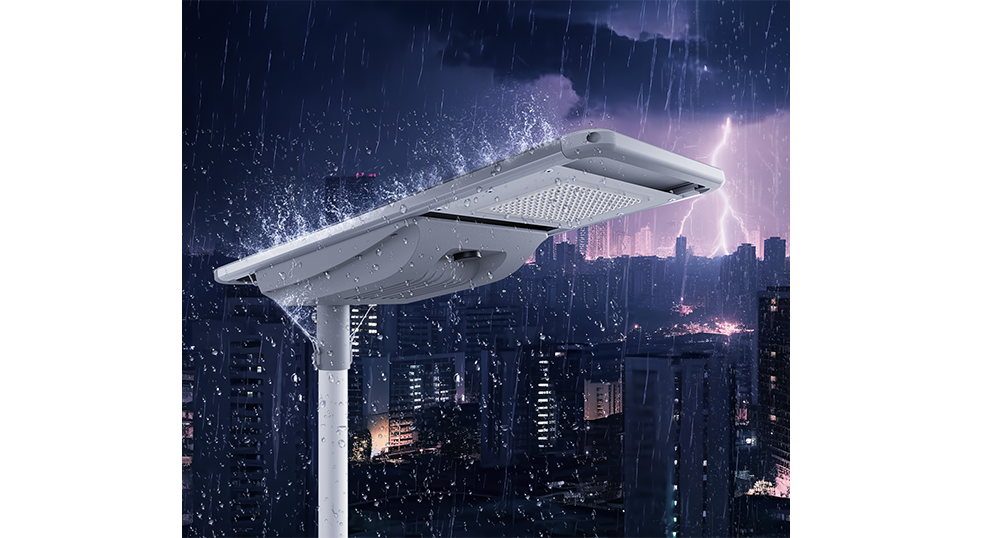
Highway and rural lighting equipment is exposed to rain, dust, humidity, temperature changes, and mechanical impact.
Depending on the application, buyers should evaluate:
The appropriate protection level should be determined by the actual project environment and applicable specifications.
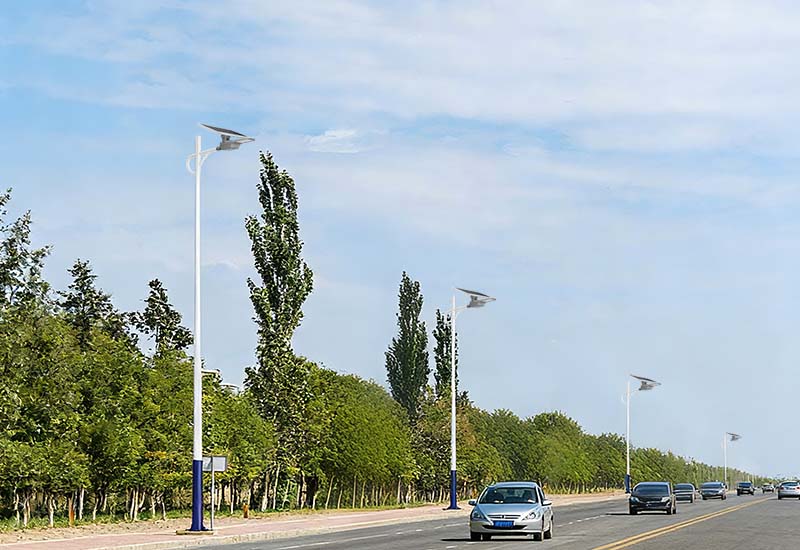
Solar lighting can be considered for a range of highway-related areas where independent lighting is practical.
Auxiliary roads and service roads may be located away from existing electrical infrastructure.
Solar lighting can provide independent illumination without requiring a new grid connection for every lighting point.
Interchanges, access roads, maintenance areas, and supporting infrastructure may require lighting even when extending utility power is difficult.
Solar lighting can provide an independent option for selected areas.
Solar lighting can also be used around selected peripheral areas of toll facilities and highway infrastructure, depending on the project's lighting requirements and local regulations.
Bridge approaches and other isolated infrastructure areas can benefit from independent lighting when conventional electrical infrastructure is difficult to install.
For large bridge projects, however, lighting requirements should be evaluated as part of the overall engineering design rather than treating solar lighting as a universal replacement for grid-powered systems.
Rural roads have different requirements from urban streets and major highways.
In many rural areas, the main challenges are limited grid coverage, difficult maintenance access, and the cost of extending electrical infrastructure.
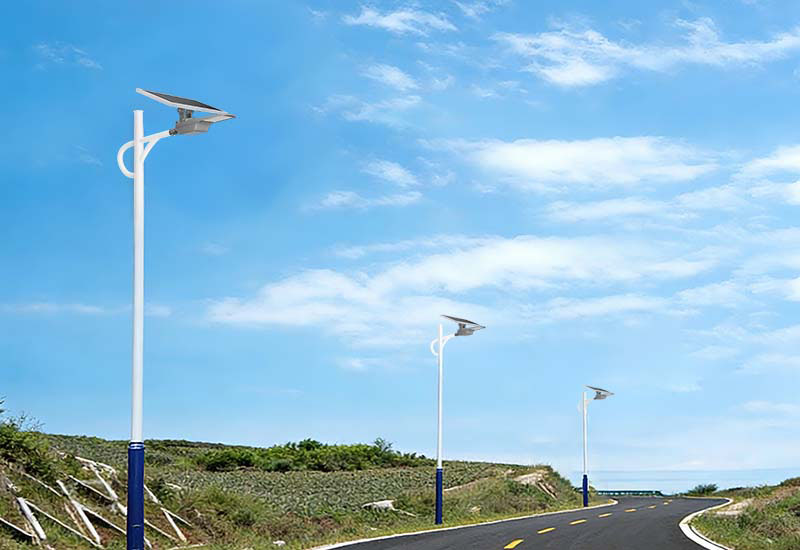
Solar street lighting can provide independent illumination for village roads, township roads, and local public areas.
For communities located far from electrical grids, solar lighting can provide an independent lighting infrastructure without waiting for grid expansion.
Roads connecting villages, agricultural areas, and local facilities can be suitable for solar lighting when the required lighting level and system configuration are properly evaluated.
Solar lighting can also be considered for roads and outdoor areas around remote industrial facilities where grid connections are unavailable or costly.
When comparing solar lighting suppliers and products, contractors should look beyond LED wattage and lumen output.
| Factor | What to Evaluate |
|---|---|
| Solar panel | Panel type, efficiency and charging capacity |
| Battery | Chemistry, capacity, operating temperature and expected service life |
| LED module | Efficiency, lifetime and optical performance |
| Light distribution | Beam pattern, road width, pole spacing and uniformity |
| Autonomy | Required operating time during low-solar conditions |
| IP protection | Resistance to rain, dust and moisture |
| IK protection | Impact resistance where required |
| Controller | Charging and intelligent power management functions |
| Structure | Corrosion resistance and mechanical durability |
| Installation | Pole compatibility, tilt and adjustment requirements |
| Maintenance | Accessibility of battery and key components |
| Compliance | Certifications and project-specific requirements |
| Warranty | Coverage for key components and system |
The correct configuration should always be determined according to the project location and technical requirements.
Solar and grid-powered lighting each have advantages depending on the project environment.
| Factor | Solar Lighting | Grid-Powered Lighting |
|---|---|---|
| Grid connection | Not required | Required |
| Cable installation | Limited or unnecessary | Required |
| Remote deployment | Well suited | More difficult where grid access is limited |
| Electricity cost | No grid electricity required | Ongoing electricity cost |
| Installation flexibility | High | Depends on electrical infrastructure |
| Maintenance | Focuses on solar, battery and lighting components | Includes electrical and grid-connected equipment |
| Best suited for | Remote and off-grid locations | Areas with established electrical infrastructure |
The decision should be based on the total project cost, site conditions, lighting requirements, and long-term operating strategy rather than the initial equipment price alone.
A successful solar lighting project starts with application analysis rather than product selection.
Identify:
Determine the required illumination level, uniformity, light distribution, glare control, and operating schedule according to the project specification and applicable local standards.
Local solar radiation and seasonal weather conditions directly influence the required photovoltaic capacity.
The system should be designed around actual site conditions rather than relying on a standard configuration.
Battery capacity should be matched to:
Finally, select the appropriate LED luminaire, photovoltaic panel, battery, controller, mounting structure, and control functions.
For larger projects, suppliers should be able to provide technical specifications, lighting calculations, product drawings, and configuration recommendations.
Solar lighting systems are also becoming more intelligent.
Depending on the product and project requirements, smart functions may include:
These functions can help optimize energy consumption and lighting operation.
However, smart functions should be selected according to actual project requirements. Not every rural road or infrastructure project needs a complex remote-control system.
HIPO Lighting provides solar street lighting solutions for outdoor and infrastructure applications, including rural roads, public areas, and off-grid environments.
Its solar lighting range includes different configurations designed for different installation and project requirements.
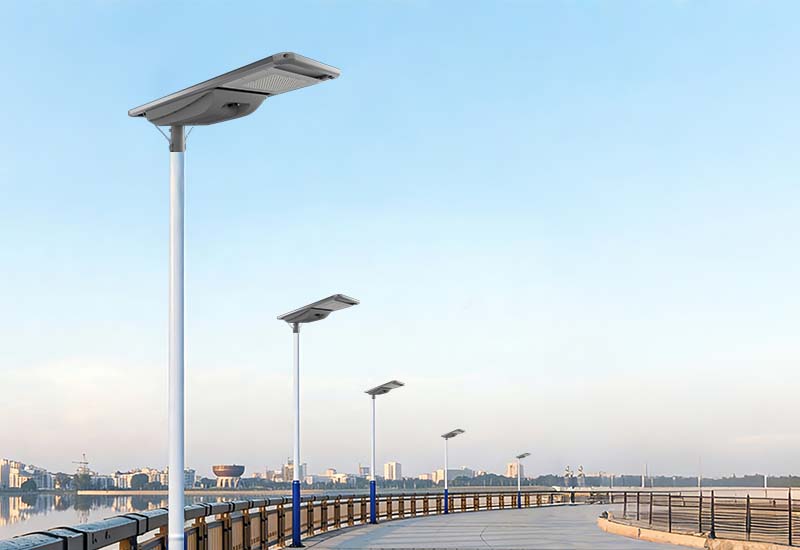
The S02 Kestrel2 is a split solar street lighting solution designed around a separate photovoltaic panel and lighting system.
Its product configuration includes a monocrystalline solar panel, LiFePO4 battery, MPPT charging technology, adjustable solar panel positioning, and an IP66 protection rating.
The adjustable solar panel design can help optimize panel orientation for different installation conditions.
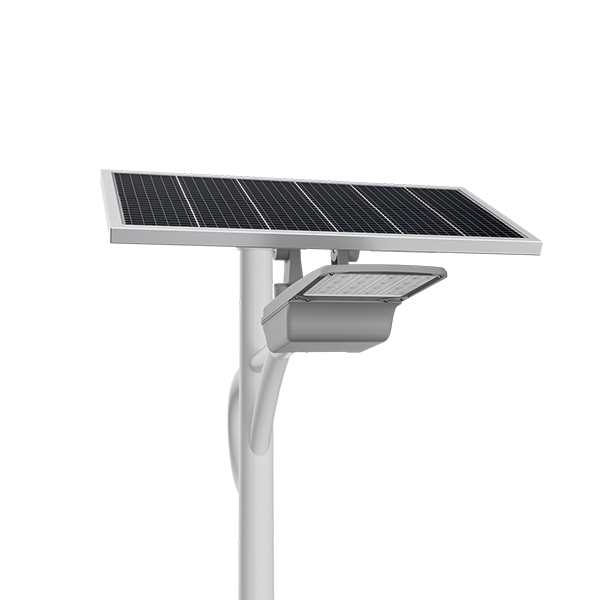
[S02 Kestrel2 Split Solar Street Light]
The S07 is an integrated solar street light designed for applications requiring a compact solar lighting configuration.
Depending on the selected configuration, the S07 range provides high-output LED lighting, photovoltaic charging, battery storage, and outdoor protection within an integrated system.
For project applications, the actual configuration should be selected according to the required lighting performance, operating hours, solar conditions, and installation environment.
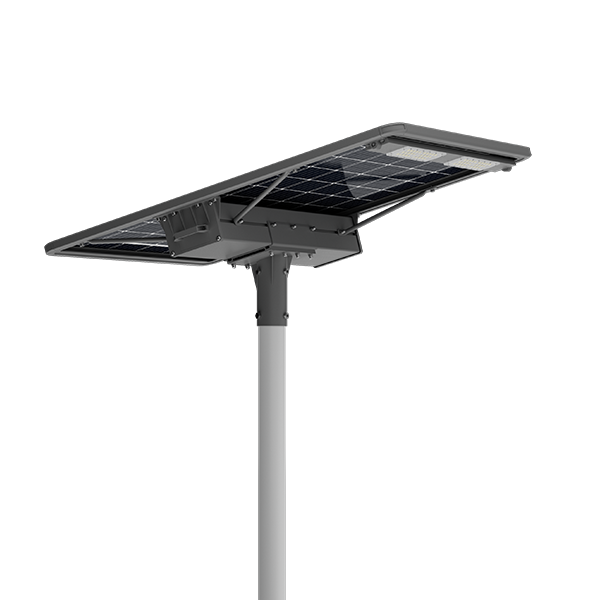
[S07 Integrated Solar Street Light]
For larger infrastructure projects, HIPO can also support product selection and project-specific configuration according to application requirements.
Internal links:
Choosing the right manufacturer is as important as selecting the right solar street light.
Before placing a project order, contractors and distributors should evaluate:
Check whether the supplier has sufficient production capacity for the required project quantity and delivery schedule.
Ask about incoming material inspection, production inspection, finished-product testing, waterproof testing, aging testing, and other relevant quality procedures.
For engineering projects, a supplier should be able to provide technical documentation and help with product selection and system configuration.
For projects with specific requirements, OEM/ODM and product customization capabilities can be important.
Consider warranty terms, spare parts, technical support, and after-sales service before selecting a long-term supplier.
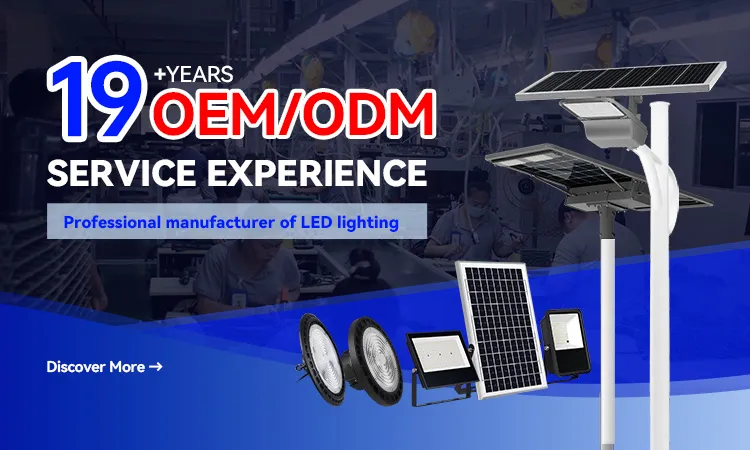
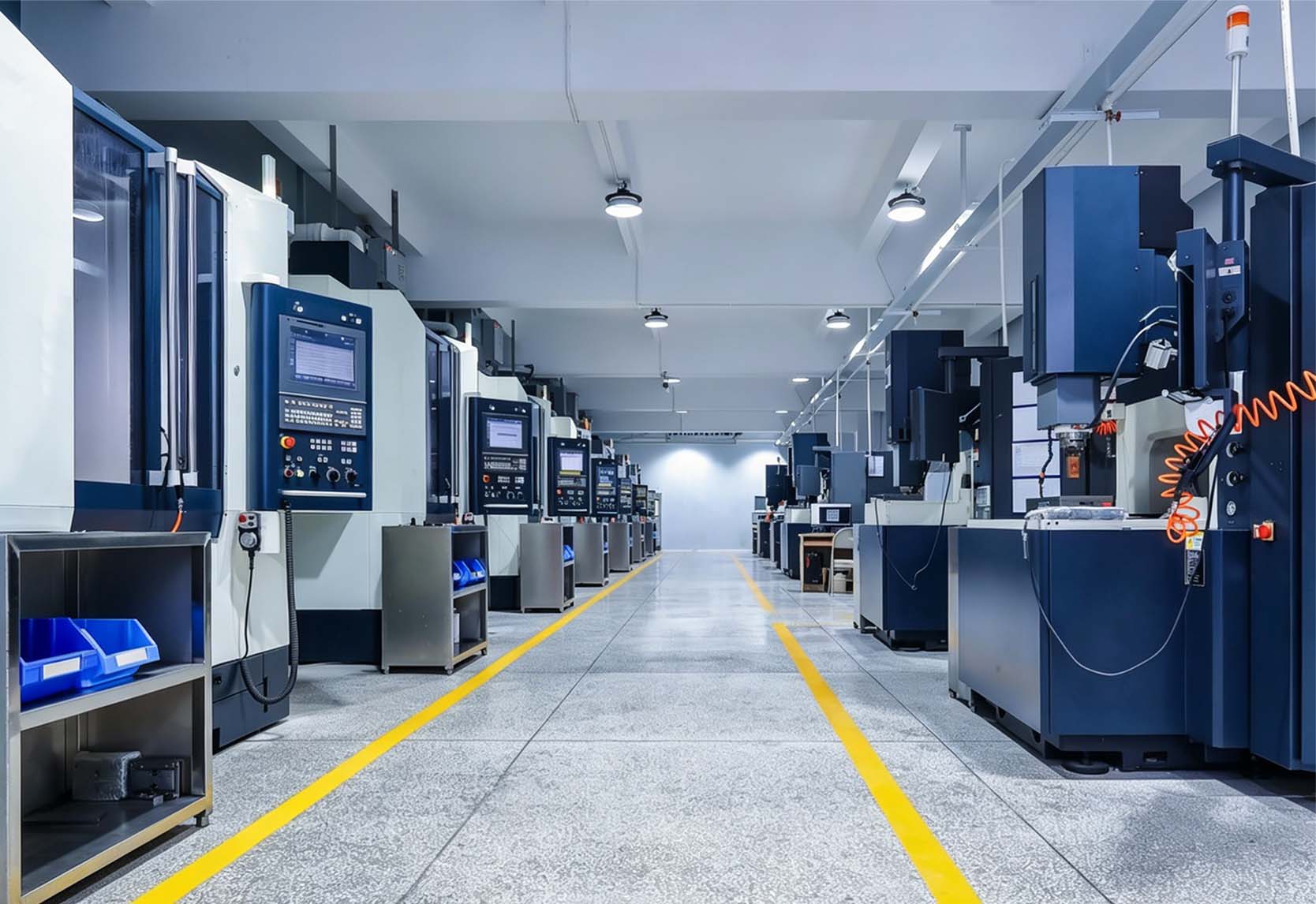
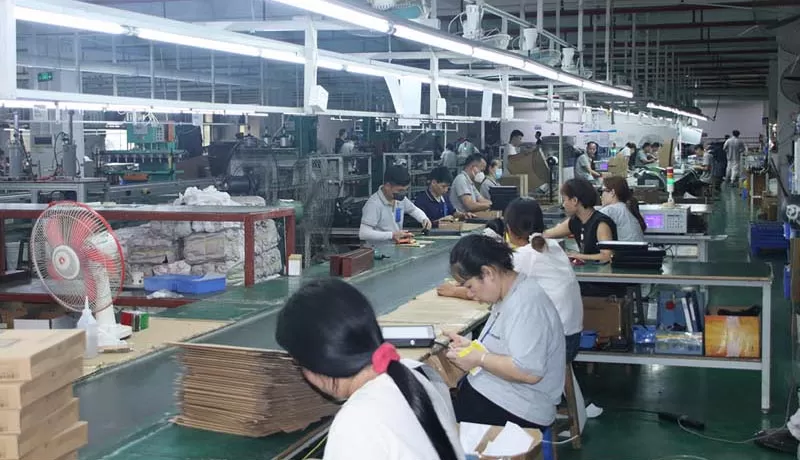
HIPO's manufacturing, quality-control, R&D, project service, and OEM/ODM capabilities can support different types of outdoor lighting projects.
Internal links:
Yes. Solar lighting is particularly suitable for rural roads where grid access is limited or extending electrical infrastructure would be costly. The system should be sized according to local solar conditions, road requirements, operating hours, and required autonomy.
Solar lighting can be used for selected highway infrastructure applications such as auxiliary roads, service roads, access areas, and remote infrastructure. The suitability of solar lighting should be evaluated according to the project's lighting requirements, location, and applicable standards.
There is no universal number. Required autonomy depends on local solar radiation, seasonal weather, daily operating hours, LED power, battery capacity, and project requirements. A proper system should be designed using local environmental data rather than applying a fixed autonomy value to every project.
Solar lighting system sizing normally considers LED power, operating hours, solar radiation, photovoltaic capacity, battery capacity, autonomy requirements, and environmental conditions. For engineering projects, lighting calculations and system configuration should be completed before equipment is finalized.
Yes, provided that the photovoltaic and battery system is properly designed for local conditions. Solar panels can still generate energy under diffuse sunlight, while the battery supplies stored energy at night. Areas with extended periods of low solar radiation may require additional energy-storage capacity.
The required IP rating depends on the installation environment and project specification. Outdoor solar lighting generally requires appropriate protection against dust and water, but the exact rating should be selected according to site conditions.
An integrated solar street light combines the main lighting, battery, controller, and photovoltaic components into a compact configuration. A split system separates the photovoltaic panel from the lighting unit, providing greater flexibility for panel positioning and system configuration.
Yes. Project requirements can vary significantly by road layout, solar conditions, lighting level, pole height, operating schedule, and environmental conditions. A qualified manufacturer can help select or customize the appropriate system configuration.
Evaluate the manufacturer's production capability, quality-control process, product testing, technical support, customization capabilities, certifications, warranty, delivery capacity, and previous project experience. A reliable supplier should be able to provide clear technical documentation rather than focusing only on product price.
High-performance solar lighting systems can provide a practical solution for highways, rural roads, remote communities, and other infrastructure projects where grid connection is limited or expensive.
However, successful solar lighting is not simply about choosing a high-power LED fixture. The system needs to be designed around the project's road layout, lighting requirements, solar conditions, battery autonomy, environmental exposure, installation conditions, and long-term maintenance strategy.
For contractors, distributors, EPC companies, and infrastructure developers, working with an experienced solar lighting manufacturer can simplify product selection, system configuration, quality control, and project delivery.
HIPO Lighting provides solar street lighting and outdoor lighting solutions for different infrastructure applications. If you are planning a highway, rural road, or off-grid lighting project, contact HIPO Lighting to discuss your project requirements and receive a suitable lighting solution.