

When evaluating outdoor lighting tenders, procurement teams often compare product datasheets covering wattage, lumen output, CCT, IP rating and price. However, suppliers may also submit IES photometric files, LM-79 test reports, LM-80 data, TM-21 projections and other compliance documents.
Receiving a document does not automatically mean that it is relevant, current or applicable to the product being purchased. A report may describe a different model, LED package, optic or operating condition. Even genuine test results can be misinterpreted when the test method does not support the performance claim made in the tender.
For lighting engineers, procurement managers, contractors and third-party quality inspectors, the key is to understand what each document proves, what it does not prove, and how to verify that the evidence matches the offered product.
This guide explains how to review the four main types of lighting performance documents, identify common inconsistencies, and write clearer documentation requirements into a lighting tender.
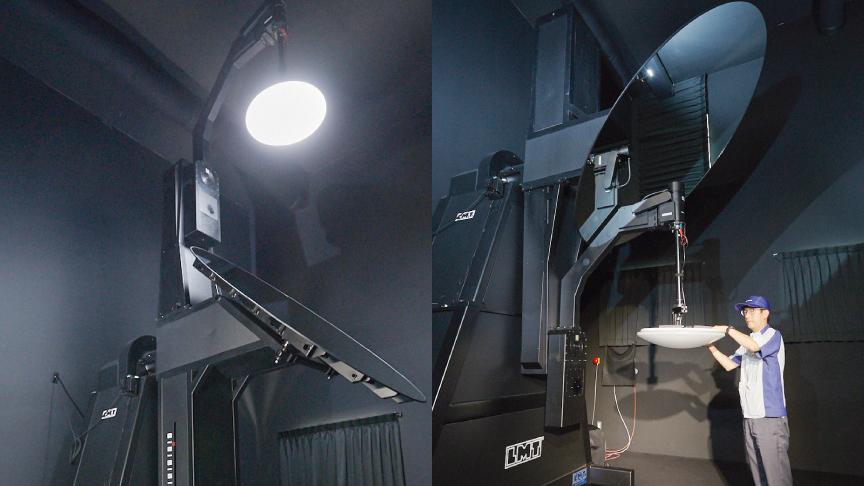
These documents address different aspects of lighting performance. They should be reviewed as complementary evidence, not interchangeable certificates.
| Document | Main purpose | What to verify |
|---|---|---|
| IES photometric file | Describes the luminaire's light distribution for calculation and simulation | Product configuration, photometric data, orientation and consistency with supporting test records |
| LM-79 report | Measures optical and electrical performance of applicable solid-state lighting products under defined test conditions | Measured flux, input power, efficacy, color data, test conditions and sample identity |
| LM-80 report | Measures light-output and, where applicable, color maintenance of LED packages, arrays or modules under controlled conditions | LED source identity, test duration, temperatures, drive conditions and maintenance data |
| TM-21 report | Projects long-term flux maintenance using applicable LM-80 test data | Input dataset, case temperature, drive current, projection method, claimed duration and extrapolation limits |
A useful way to remember the distinction is:
IES: How is light distributed?
LM-79: What optical and electrical performance was measured under the stated test conditions?
LM-80: How did the tested LED source maintain its output over time?
TM-21: What flux-maintenance projection can be calculated from the applicable LM-80 data?
No single document establishes every aspect of finished-luminaire quality, regulatory compliance, environmental durability or service life.

An IES file is a standardized electronic format for photometric data. Files prepared in the applicable IES LM-63 format can be used by lighting calculation tools such as DIALux, Relux and AGi32, depending on software support.
The data describes the luminaire's light distribution and relevant photometric information. It helps designers calculate illuminance, uniformity, spacing and other lighting criteria for a proposed installation.
Start by confirming that the file corresponds to the exact luminaire offered in the bill of quantities (BOQ).
Compare the file information, where available, with:
Manufacturer and product identifier.
Luminaire model or ordering code.
Optic, beam distribution or lens option.
Rated output or product variant.
CCT and other configuration details relevant to the project.
Photometric test or measurement information, where provided.
Not every IES file contains all these details in a standardized, human-readable header. Therefore, the file should be checked alongside the product datasheet, test report and supplier's configuration schedule.
A matching brand name is not sufficient if the optic, output or fixture version differs.
Load the file into a suitable photometric viewer or lighting calculation program. Review the distribution curve and verify that the file behaves as expected for the intended application.
For example, a roadway luminaire, a narrow-beam floodlight and a wall washer should not be assumed to have interchangeable distribution data simply because they share the same housing family.
Confirm that the file reflects the proposed installation orientation and the specified optical configuration. If a supplier changes the optic, shield or mounting arrangement, ask whether the original photometric data remains applicable.
Where the IES file and LM-79 report describe the same product configuration and measurement basis, compare their photometric results for consistency.
Investigate differences in reported flux, intensity distribution or configuration. However, do not automatically require every file to display an identical lumen figure: the reported quantities, test conditions, normalization and file preparation may differ.
Ask the supplier or laboratory to explain any material discrepancy and provide corrected or supporting documentation where necessary.
A photometric file may be based on measured data or generated from a design or calculation process. The distinction matters when the tender requires measured photometric performance.
If the tender requires laboratory-measured data, request evidence of the measurement basis, the relevant test report and traceability to the offered configuration. Do not assume that a file is measured merely because it uses the IES format.
ANSI/IES LM-79 describes measurement procedures for optical and electrical properties of applicable solid-state lighting products under specified conditions. Depending on the test scope, results may include luminous flux, electrical power, system efficacy, luminous intensity distribution and color or spectral information.
The applicable edition and required test scope should be stated in the tender or agreed with the project engineer.
Check the report cover and test details for:
Manufacturer and sample identification.
Product model or ordering code.
LED and driver configuration, where identified.
Optic, CCT and output variant.
Test date and applicable LM-79 edition.
Laboratory identity and report number.
If the report lists a different model from the tender submission, request an explanation. A related model may share some components, but that does not automatically make its test results representative of the quoted fixture.
Check the measured luminous flux against the claimed fixture output. Confirm that the values refer to the same product configuration and that the supplier is not comparing LED-package output with finished-luminaire output.
If a datasheet claims 15,000 lumens while the report shows 11,800 lumens for what appears to be the same configuration, the difference requires clarification before the product is accepted.
Possible explanations include a different product variant, different operating conditions or an incorrect marketing claim. Do not assume which explanation applies without evidence.
System efficacy is calculated by dividing measured luminous flux by measured input power, provided both figures relate to the same test conditions.
For example, if a luminaire produces 12,000 lumens at an input power of 100 W:
System efficacy = 12,000 ÷ 100 = 120 lm/W.
Compare the calculated result with the report and datasheet. If they differ materially, ask the supplier to reconcile the numbers.
Avoid using one universal efficacy range to judge every outdoor luminaire. Output and efficacy depend on the fixture type, optical system, CCT, CRI, drive conditions and design priorities. A specialized narrow-beam fixture and a general-purpose area light may have different performance characteristics.
Where relevant to the project, review:
Correlated color temperature (CCT).
Color rendering index (CRI).
Chromaticity coordinates or spectral data, if required.
Input power and power-related results.
Photometric distribution.
Measurement uncertainty and stated test conditions.
A result should be compared against the tender's actual tolerance. Do not invent a universal CCT or output tolerance if the project specification does not define one.
Confirm the laboratory's identity and verify its accreditation status and scope when accredited testing is required.
Accreditation should be relevant to the laboratory, the applicable measurement method and the work performed. A logo on the report alone is not sufficient evidence that the specific test falls within the laboratory's accredited scope.
Where possible, check the accreditation body's public directory, confirm the report number with the issuing laboratory, and ask for clarification if the sample description or results appear inconsistent.
There is no single age limit that automatically makes every LM-79 report invalid. A report's relevance depends on whether the tested sample still represents the product being offered.
Ask whether the following have changed since testing:
LED package or module.
Driver and operating current.
Optic, lens or reflector.
Housing or thermal design.
CCT, CRI or output configuration.
Product revision or manufacturing specification.
A report from several years ago may remain useful if the product and test scope are unchanged. A newer report may still be unsuitable if it covers a different configuration.
One of the most common procurement mistakes is treating an LED source's projected flux-maintenance life as the guaranteed service life of the complete luminaire.
LM-80 and TM-21 provide evidence about LED source performance over time, but they do not independently establish the life of every component in a finished fixture.
LM-80 is a method for measuring maintenance of light output and relevant color characteristics of LED packages, arrays or modules under controlled test conditions.
When reviewing an LM-80 report, check:
LED manufacturer and exact source identifier.
Package, array or module type.
Test duration and measurement intervals.
Tested case temperatures and drive conditions.
Light-output maintenance data.
Any relevant color-maintenance data.
Whether the LED source matches the one used in the proposed luminaire.
Do not assume that every LM-80 report uses the same temperature points or test duration. Read the conditions stated in the actual report and confirm that the applicable test method is appropriate.
Most importantly, LM-80 is not a direct endurance test of the complete luminaire. It does not, by itself, establish driver life, seal life, corrosion resistance or total system failure rate.
TM-21 provides a method for projecting long-term flux maintenance using applicable LM-80 data. Its projections depend on the data available and the specified operating conditions, including relevant temperature and drive-current information.
When reviewing a TM-21 report, check:
Whether the input data corresponds to the LED source in the offered fixture.
Whether the test duration and dataset are identified.
Whether the case temperature and drive conditions are appropriate for the intended application.
Whether the projection method and stated duration follow the applicable TM-21 requirements.
Whether the supplier's marketing claim matches the reported projection.
The projected result is not the same as a duration directly observed in the laboratory. It is a calculation based on measured maintenance data and a defined projection method.
TM-21 limits how far the projection may extend beyond the supporting test data. The applicable limit must be checked against the report's edition, dataset and calculation method.
Under the commonly referenced six-times limit, a projection based on 6,000 hours of eligible LM-80 data cannot simply be presented as an unrestricted 100,000-hour result. The actual report and applicable method determine the permitted claim.
If a supplier quotes a very long L70 duration, request the underlying LM-80 report and TM-21 calculation. Verify that the reported projection, input data and stated conditions support the exact claim.
LED flux maintenance depends on operating conditions. A projection associated with one case temperature should not be assumed valid at a substantially different temperature.
For an outdoor luminaire, the actual thermal environment depends on the LED source, drive current, heat path, enclosure, installation orientation and ambient conditions.
Ask the manufacturer to explain how the case temperature used in the projection relates to the LED source's expected operating conditions in the offered luminaire. Where the project has severe ambient temperatures or restricted airflow, the relevance of that assumption deserves particular attention.
A luminaire can experience failures unrelated to LED flux depreciation. Drivers, electronic components, connectors, seals and other parts can affect service life.
For projects where life-cycle cost or warranty is important, evaluate LED flux-maintenance evidence together with the manufacturer's warranty, thermal design information, driver specifications, maintenance requirements and relevant reliability or endurance evidence.
Do not present an LM-80 or TM-21 result alone as proof that the entire fixture will operate for the same number of hours without failure.
A documentation discrepancy is a reason to investigate, not automatic proof of fraud. The aim is to establish whether the submitted evidence is authentic, applicable and consistent with the offered product.
| Issue | What to look for | Recommended action |
|---|---|---|
| Model mismatch | The report identifies a different model or product variant | Request confirmation of the tested configuration and evidence that it represents the offered product |
| Inconsistent photometric data | The IES file and test report appear to describe different outputs or distributions | Check test conditions, configuration and data basis; request clarification |
| Inflated performance claim | Datasheet values materially exceed the relevant measured results | Ask the supplier to reconcile the values and identify the applicable operating conditions |
| Unclear laboratory status | Accreditation or testing scope cannot be verified | Check the laboratory and accreditation body's records where applicable |
| Outdated product evidence | The report predates a product redesign or component change | Request evidence covering the current product revision |
| Unsupported lifetime claim | A long L70 claim is provided without relevant input data or a TM-21 calculation | Request the LM-80 data, TM-21 report and operating-condition assumptions |
| Missing traceability | Report number, sample identity or manufacturer details are incomplete | Request the full report and traceable product documentation |
Be cautious with allegations of falsification. A mismatch may result from a document-control error, product revision or an incorrectly selected report. Confirm the facts before rejecting a supplier or making a formal allegation.
Tender documents should state which reports are required for each luminaire category and what each report must demonstrate. Avoid generic wording such as “all relevant certificates must be provided” when a specific performance claim needs verification.
A practical tender clause may include the following requirements.
For each luminaire type requiring lighting simulation, the supplier shall submit a photometric file in the specified format. The file shall correspond to the offered model and relevant optical configuration. Where measured data is required, the supplier shall provide supporting measurement documentation or other evidence specified by the project.
Where required by the tender or applicable rules, the supplier shall provide an LM-79 report or accepted equivalent evidence for the offered product configuration. The report shall identify the sample and include the measurements relevant to the project's specified performance criteria.
Where LED flux-maintenance claims are used for evaluation, the supplier shall provide relevant LM-80 data for the LED source used in the offered luminaire and a TM-21 projection where applicable. The projection shall identify the relevant input data, operating conditions and claimed maintenance duration.
The supplier shall identify the exact model, optic, CCT, output and other relevant options covered by each submitted document. Any difference between the tested sample and offered configuration shall be declared and supported by an explanation acceptable to the project engineer.
The tender shall define how documents will be reviewed, what constitutes an acceptable deviation and whether independent testing or sample verification may be required. Any costs, sampling procedure, laboratory requirements and dispute-resolution arrangements should be stated in the contract rather than left ambiguous.
Additional documentation, such as ingress protection, impact resistance, corrosion testing, surge performance or regulatory conformity evidence, should be requested when relevant to the product type, installation environment and applicable requirements.
Use this checklist during technical evaluation before comparing commercial offers.
| Check item | Verification question |
|---|---|
| Product identity | Does each report identify the exact model or a clearly documented representative configuration? |
| Configuration | Do the optic, output, CCT, driver and other relevant options match the bid? |
| IES data | Is the photometric file suitable for the intended calculation and consistent with the product evidence? |
| LM-79 results | Are measured output, input power, efficacy and color data relevant to the tender requirements? |
| LM-80 data | Does the report cover the LED source used in the offered fixture? |
| TM-21 projection | Are the input dataset, operating conditions and projection limits appropriate? |
| Laboratory credentials | Can the laboratory and relevant accreditation scope be verified where required? |
| Report traceability | Are the report number, test date, sample identity and issuing organization identifiable? |
| Revision history | Have any changes to the product made the submitted evidence unrepresentative? |
| Claim consistency | Do the datasheet, tender response and test documents support the same performance claims? |
| Deviations | Has the supplier declared differences or limitations in the submitted documentation? |
| Acceptance procedure | Are the required documents and verification steps defined in the tender? |
A useful evaluation method is to classify each item as verified, clarification required or not demonstrated. This is more defensible than treating the mere presence of a PDF as proof of compliance.
No. An IES file is a standardized photometric data file used to represent light distribution for calculations. An LM-79 report documents measurements made under the applicable test method. The two can support each other, but neither automatically replaces the other.
There is no universal age limit that automatically invalidates every report. The key question is whether the tested sample and configuration still represent the product being supplied and whether the report meets the tender's requirements.
Only if the project engineer accepts it and the supplier provides a defensible basis for its use. Different optics, outputs or fixture configurations can change the distribution. Where the tender requires exact-model measured data, a similar-model file is not an adequate substitute.
No. LM-80 measures light-output and relevant color maintenance of specified LED sources under controlled conditions. It does not directly test the complete luminaire's lifetime.
No. TM-21 calculates a flux-maintenance projection from applicable LM-80 data within the method's limits. It is not a guarantee against component failure or proof of the complete fixture's service life.
Not necessarily. The required documents depend on the project specification, applicable regulations, procurement rules and performance claims being evaluated. Require evidence that addresses the actual acceptance criteria rather than requesting every report by default.
Check the product identity, test conditions, report number, issuing laboratory and applicable accreditation scope. Contact the issuing laboratory or accreditation body when appropriate. Ask the supplier to resolve discrepancies before making a conclusion about authenticity.
IES files, LM-79 reports, LM-80 data and TM-21 projections answer different questions. Effective tender evaluation depends on understanding those differences and confirming that each document applies to the product being offered.
For outdoor lighting projects, the most useful checks are straightforward: match the model and configuration, compare the relevant performance data, verify the testing basis, review lifetime projections within their limits and document any unresolved deviations.
These checks help project teams make more reliable comparisons between suppliers and reduce the risk of performance disputes after installation.
HIPO Lighting manufactures outdoor LED lighting for architectural and landscape, solar street, tunnel and roadway, and industrial applications. For lighting tenders, the availability of IES files, performance test reports and LED flux-maintenance documentation should be confirmed for the specific product and configuration under consideration.
Preparing a lighting tender or reviewing technical submittals? Contact HIPO Lighting to discuss your project requirements and confirm the product documentation available for the relevant luminaire types.